


Dear subscribers,
Today, I want to share a new episode with Sumeet Marwaha.
Sumeet is the Head of Data at Brex and came personally recommended by the Claude Code team. In our episode, he showed me how to use Claude Code to build an AI data analyst that can answer questions and deliver insights without any SQL queries. If you’re tired of analyzing data manually, then this interview is a must-watch.
Watch now on YouTube, Apple, and Spotify.
Sumeet and I talked about:
(00:00) How to make Claude Code your data analyst
(03:04) Analyzing data with AI: Monitor → Explore → Craft → Impact
(10:23) Live demo: Building a startup funding MCP with 3 queries
(21:10) Context management: Why your data agent gets confused
(26:04) How to connect Claude to Slack and Drive for context
(35:00) Demo: Predicting which AI startups will get Series B funding
(41:32) Brex stats on which AI coding tools are actually winning
This episode is brought to you by…Glue

Team chat hasn't changed in years—it's still mostly a place to talk about work, then you switch tabs to actually do it.
Glue is the first multiplayer MCP client that lets your chat connect directly to tools like Linear, Sentry, Notion, and Vercel. Teams can log issues, update projects, or check analytics without leaving the conversation. Glue puts context-aware AI at the core of your team’s workflow, making every chat thread more useful.
Top 10 takeaways I learned from this episode
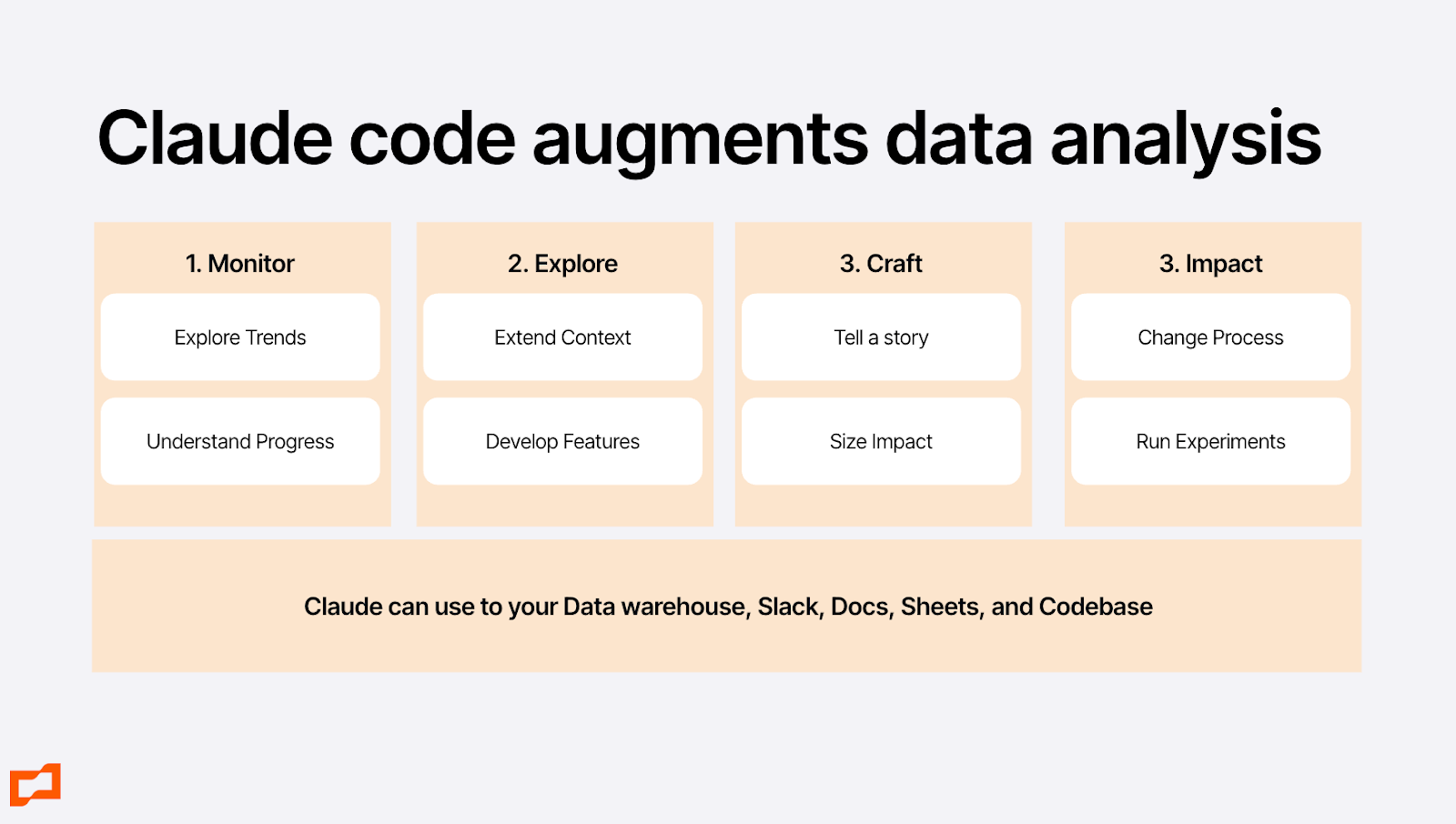
Set up Claude Code to augment every step of data analysis:
Monitor: Run your queries automatically and flag changes.
Explore: When metrics look off, pull context from Slack, Linear, and code.
Craft: Help you tell a good story by running investigations and filling gaps.
Impact: Size potential impact by reviewing past experiments and code.
The #1 mistake: Blowing up the context window. A query that returns 10,000+ rows can fill your context in one step. To avoid this, add instructions telling Claude to manage tokens, use skills to enforce limits like “limit 50 on joins,” and add 2-3 minute timeouts that trigger query rewrites.