


Dear subscribers,
Tell me if you’ve seen this before:
Today is a hard day. We’ve made the difficult decision to reduce our workforce by 1,000+ employees. Our business has never been stronger, but AI has changed how we work, and we’re restructuring to win in the agentic era...
Whenever I read one of these, I mentally translate it to what’s actually happening:
Today is a hard day. We screwed up and overhired during the zero-interest era. Now, we need to cut costs. AI agents are easy to blame, so…
According to levels.fyi, over 80,000 tech employees have been laid off in Q1, the highest level since the 2022-23 recession. Here’s a rant about why layoffs continue to happen and what you can do to take back control.
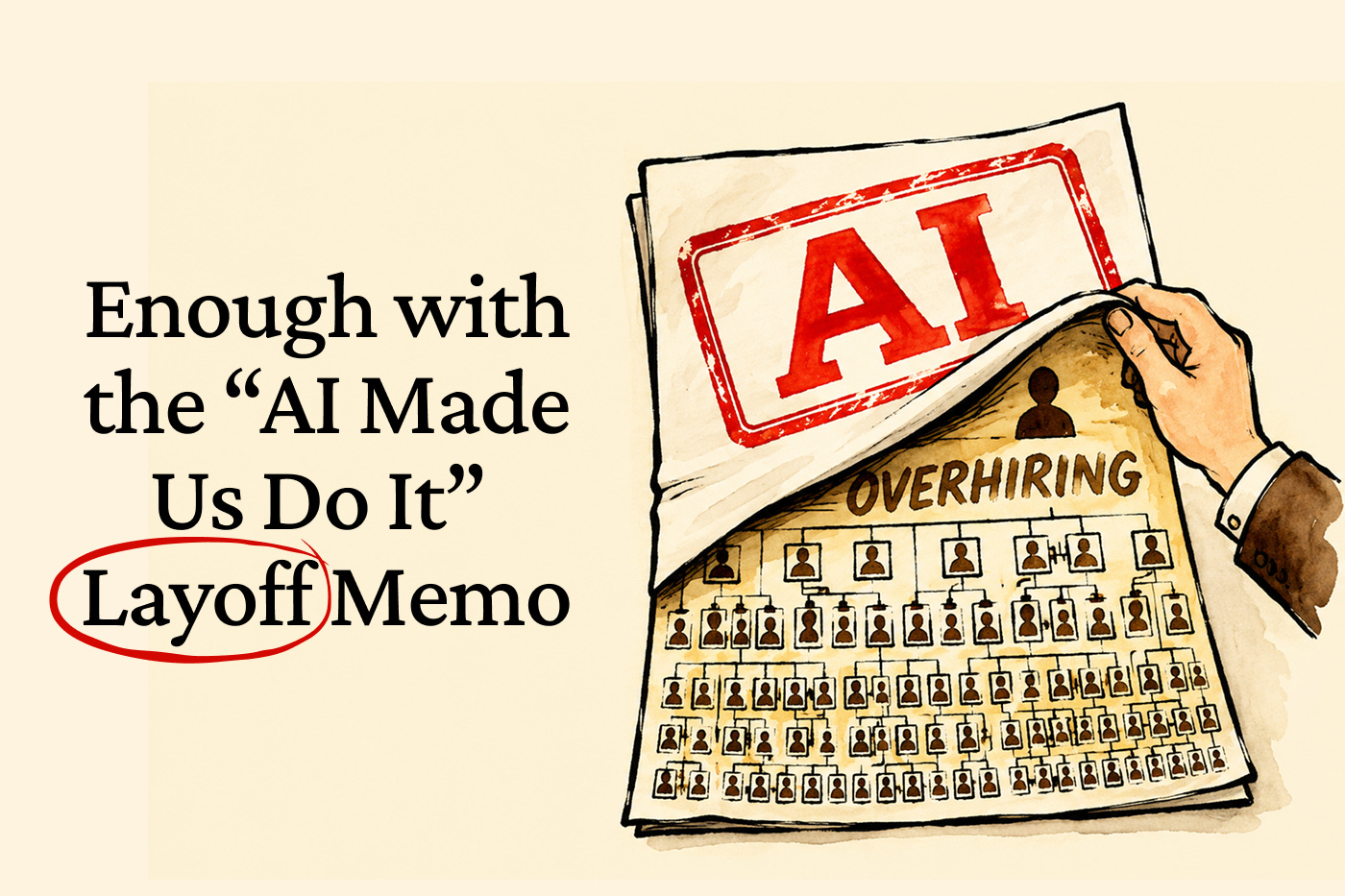
1. The “AI made us do it” copy-paste memo is an excuse
Every layoff memo looks the same these days:
“The way we work has changed...Today’s actions are not a cost-cutting exercise; they are about defining how a growth company operates in the agentic AI era.”
“This generation of AI is the most transformative technology we’ve seen...We need to be organized more leanly, with fewer layers and more ownership.”
“AI tools have changed what it means to build and run a company. A significantly smaller team, using the tools we’re building, can do more and do it better.”
The pattern is always the same: "Today is a hard day → but the business is strong → AI changes everything." It's almost as if the CEOs writing them have a group chat where they share the same script. I think they should just admit that…
2. The real reason is overhiring and empire building
Here’s how headcount grew in the ZIRP era at companies that did Q1 layoffs:
Meta: 45,000 in 2019 → 86,000 in 2022
Amazon: 341,000 in 2016 → 1.6M in 2021
Salesforce: 49,000 in 2020 → 80,000 in 2023
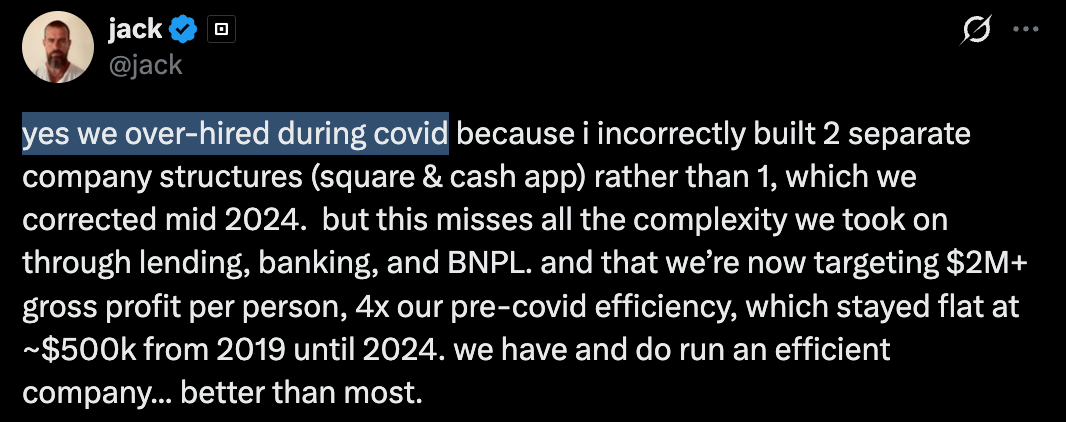
Block: 3,800 in 2019 → over 12,000 at peak
Let’s be real — the leaders who grew headcount this quickly messed up. Jack Dorsey, to his credit, basically admitted this the day after cutting 40% of Block’s staff:
There are two main drivers of organizational bloat:
Companies prioritized growth at all costs. Money was free and companies chased users and ARR instead of retention and profitability.
Empire building was the norm. Leaders were rewarded for growing their scope and headcount instead of keeping their team lean.
Growing headcount this fast is a one-way door change because…
3. The alignment tax is real
If you've ever worked inside big tech, you’ve probably experienced something like this:
You have a product idea that should ship in a week. You just have to draft a memo or deck to get approval from stakeholders and your management chain. By the time you finish the process, months have passed and the market has moved on.
I've worked at great companies with slogans like "it's still day one" and "move fast and break things." But no matter how catchy the slogan is, I now believe that:
There is no real way to escape the alignment tax other than keeping headcount small.
As a result…
4. There are basically two types of companies now
If you're a tech employee and worried about keeping your job, start by asking yourself:
What type of company am I working for?
Type 1 companies grow headcount as a last resort, even though business is doing well
For example, Anthropic is hiring a lot of people, but only because revenue grew 80x in Q1 2026. When I asked Boris (creator of Claude Code) how his team thinks about hiring, he said he only wants to hire if they've genuinely hit a ceiling on what work AI can take on.

Another example is Linear. Karri (CEO) set a rule to at most double the team every year, even though they've been profitable since 2021:

Type 2 companies are growing headcount despite a stagnating business
You can tell if you’re working in one of these companies if the hallway conversations include a mix of:
“I need more headcount to do X.”
“I need to be a manager to grow my career.”
“Why are we still hiring?”
Unfortunately, I think many tech employees are at type 2 companies where the traditional career ladder is breaking at the seams. From my friend Elena:
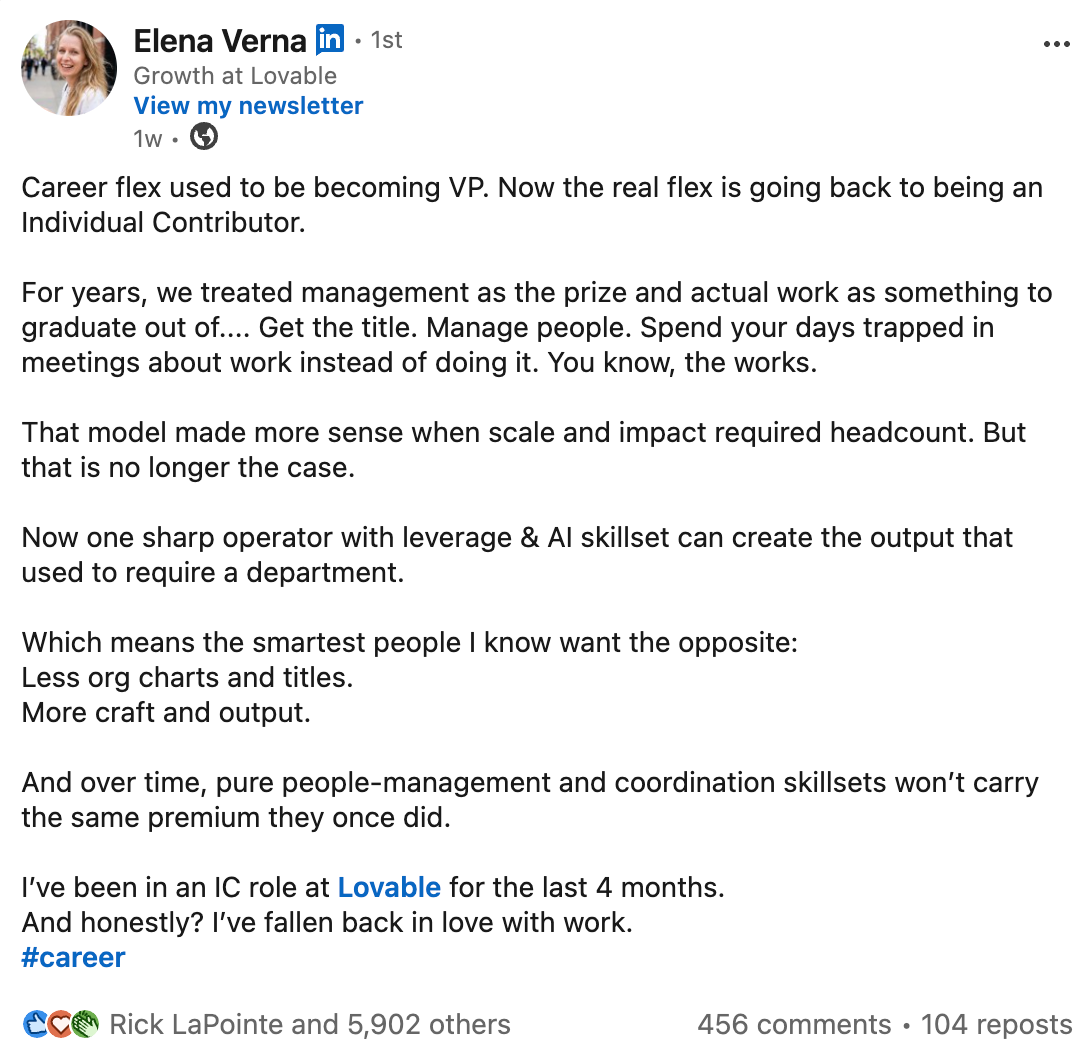
Elena’s point is that climbing to VP isn’t the flex it used to be. Smart operators are choosing to go back to IC work instead.
The next generation of great companies have learned from the mistakes of the previous generation. They’re rewarding builders over managers because they know that one person with AI leverage can avoid the alignment tax and do an entire department’s work.
5. How you can take back control as an employee
As an employee, I think the bottom line is:
You have to automate your job faster than your company can do it.
Take whatever you’re most reliable at and figure out how to do it faster with Claude Code, Codex, or another AI tool that fits your workflow. The goal is to free up your time to do work that’s higher-leverage and harder to commoditize.
I hate seeing employees be at the whim of their employer, so here's what I recommend:
Read the signals. If business growth is stagnant and leadership is suddenly obsessed with "flatter orgs," "AI-native teams," or "restructuring for the agentic era," you already know what's coming.