


Dear subscribers,
Today, I want to share a new episode with Kun Chen.
Kun is an ex-L8 principal engineer at Meta who now ships up to 40 PRs a day while rarely reviewing code. In our episode, he walked through the free tools he built to make that possible: Lavish for visual planning in HTML, Treehouse for parallel agents, and No Mistakes for catching AI’s errors before they make it to production.
Watch now on YouTube, Apple, and Spotify.
Kun and I talked about:
(00:00) Why he doesn't review code anymore
(01:04) Agentic engineering: Plan, code, validate
(06:22) Demo: Fixing an AI tutor screen with agents
(08:40) Demo: Why HTML is better than markdown for planning
(19:53) How to turn a rough idea into an AI-ready spec
(23:21) How Kun runs 20-30 agents in parallel
(32:04) No Mistakes: Kun's free AI code review tool
(45:19) What Kun checks before merging AI-written code
(50:18) How to get better at agentic engineering
I’m proud to partner with Linear

As teams ship faster with AI agents, the bottleneck shifts from building to deciding what to build.
Linear’s new Agent understands your full workspace context: roadmap, issues, customer requests, and code. Ask it to surface patterns across feedback, scope out a spec, or catch you up on team progress.
Top 10 takeaways I learned from this episode
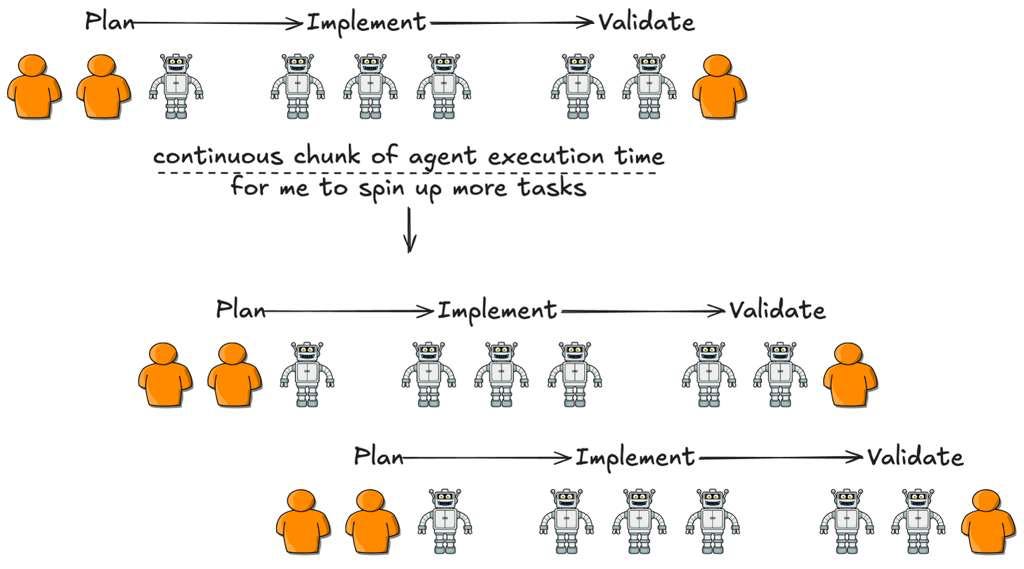
Code faster with a team of AI agents. Kun sees himself as the manager of an always-on engineering team. His job is to create plans, validate work, and improve the overall system. Specifically, he runs the same three phases each time:
Plan: Building clear plans is now the most important phase.
Implement: Coding is now handled almost entirely by agents.
Validate: Agents check the work first and only escalate to Kun if needed.
Plan: Spend most of your time here
Plan quality determines how long agents run on their own. A one-line prompt might get the agent to work for a few minutes while a detailed plan can keep it working for hours. To delegate more work to agents, move up these three planning levels: