


Upgrade to paid to unlock my personal OS course, 12+ handcrafted AI skills, $270 in AI tool credits, my private Slack community, and a full year of live workshops.
Dear subscribers,
I’ve started to get a surprising amount of work done by talking to AI while walking outside. I believe that:
We’re moving from manually using a keyboard, mouse, and laptop to directing agents in the cloud using voice.
In this post, I’ll cover five shifts that can help you get ahead of this change:
Voice will become the orchestration layer
Personal computers will move to the cloud
Products will be built for agents first
Most software will become commoditized
Trust will determine the winners and losers
I’m proud to partner with Wispr Flow

When I’m building with Claude Code, I use Wispr Flow to dictate all my prompts instead of typing. It’s more accurate than other AI voice dictation tools and saves me hours every week. Try it out for free with my exclusive link below.
1. Voice will become the orchestration layer
I’ve been using tools like Wispr Flow to dictate instructions to AI for the past year. Recently, ChatGPT Voice has taken this to the next level by making voice the orchestration layer for everything I do on a computer.
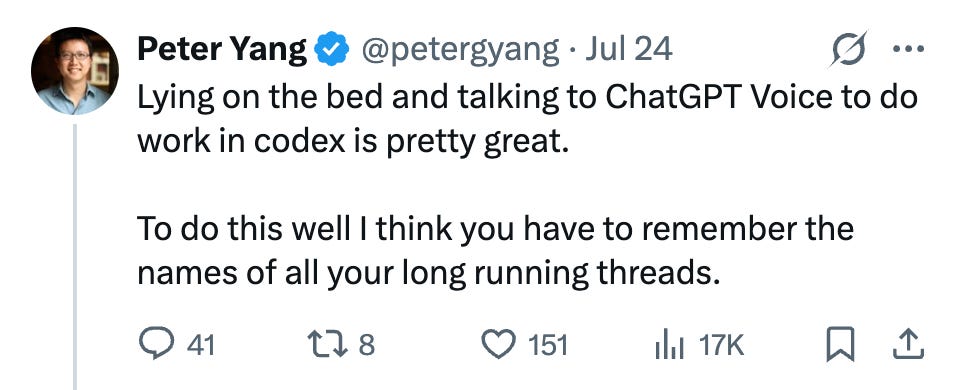
While out on a walk or in bed, I’ll turn on ChatGPT Voice and just start rambling:
“Use my chief of staff thread, check any open email loops I should respond to.”
“List the top 5 PRs for (project), let’s work through them one by one.”
“I just interviewed (guest), run the /podcast-production skill in a new thread.”
ChatGPT Voice will provide instructions to all these different threads and report back when each task is done. It honestly feels magical compared to tracking everything myself with a keyboard and mouse.
Recently, I taught my 8-year-old how to use ChatGPT. She doesn’t even know how to type but is already building games with AI just by talking to it.
For her and the generation that’ll grow up with AI, voice is already the default interface.
2. Our computers will move to the cloud
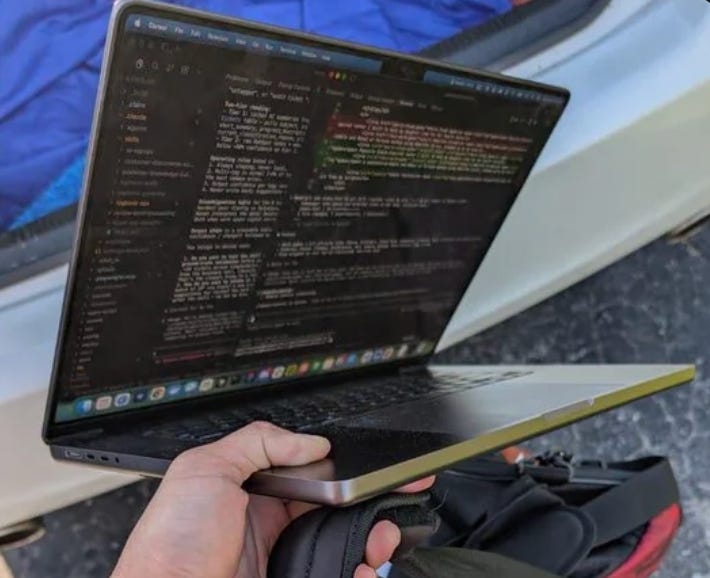
You’ve probably seen the meme of people walking around with their laptop lid half open to keep their agents running.
I think this ritual will come to an end soon because what I really want is a persistent personal computer that lives in the cloud:

An early version of this is running OpenClaw or Hermes on an always-on Mac mini. The latest version is Grok Bot, which comes closest to giving agents their own persistent cloud computer that has files, a browser, and more:
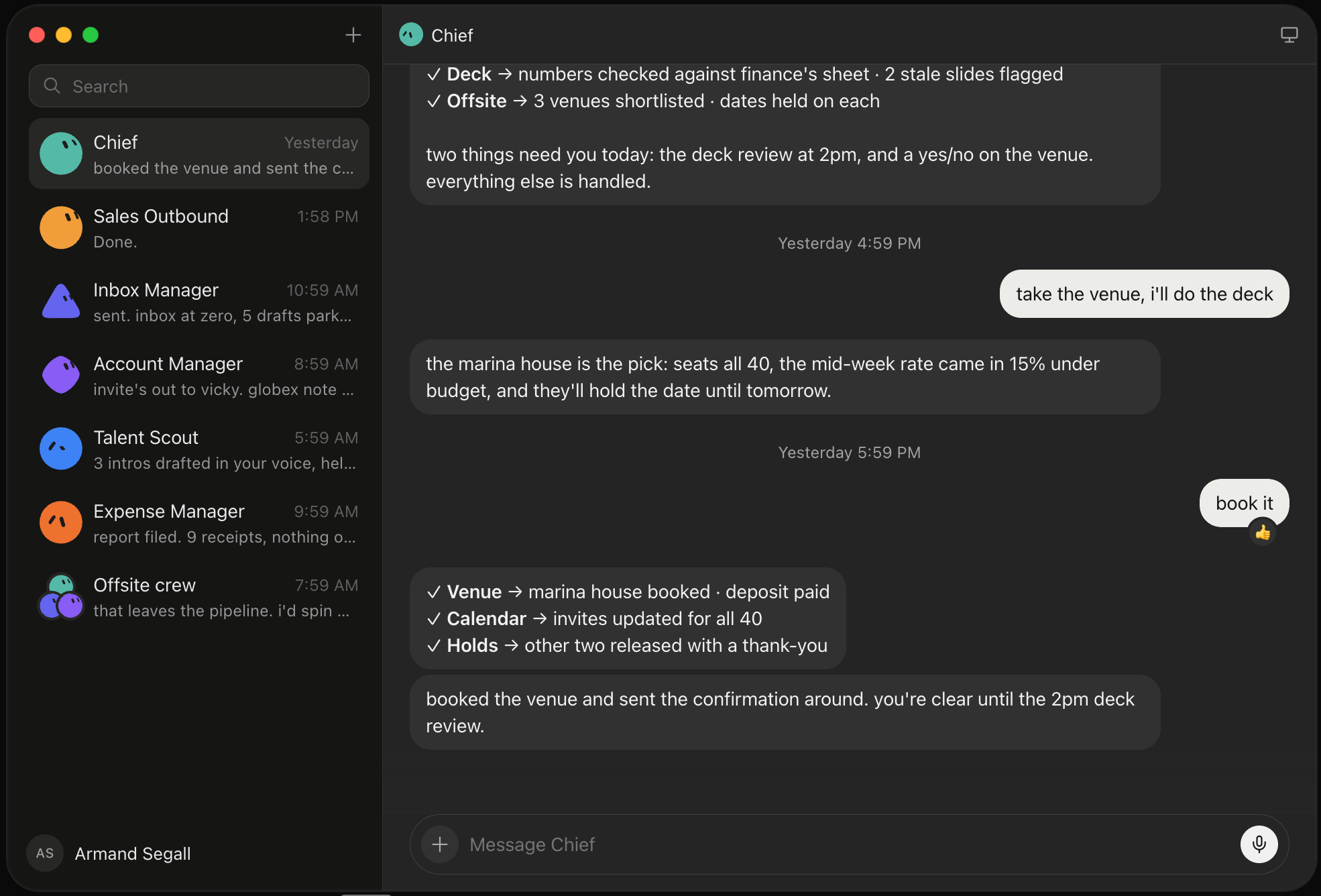
I’m sure both ChatGPT and Claude are working on a similar solution.
Your laptop’s specs will matter less when your real computer is in the cloud.
Take OpenAI’s rumored hardware device. It’s a hockey-puck-sized smart speaker that doesn’t have a screen. Soon we’ll all just be talking to agents that live in our cloud computers to get them to do work.
3. Products will be built for agents first
I’ve been trying to scratch my builder itch ever since I left my PM job. Recently, I shipped two free, open-source tools that people loved:
No AI Slop (4,400+ GitHub stars) gives agents instructions for removing AI slop from writing.
Human Review (570+ GitHub stars) lets people edit HTML and Markdown files and send feedback to agents, just like a Google Doc.
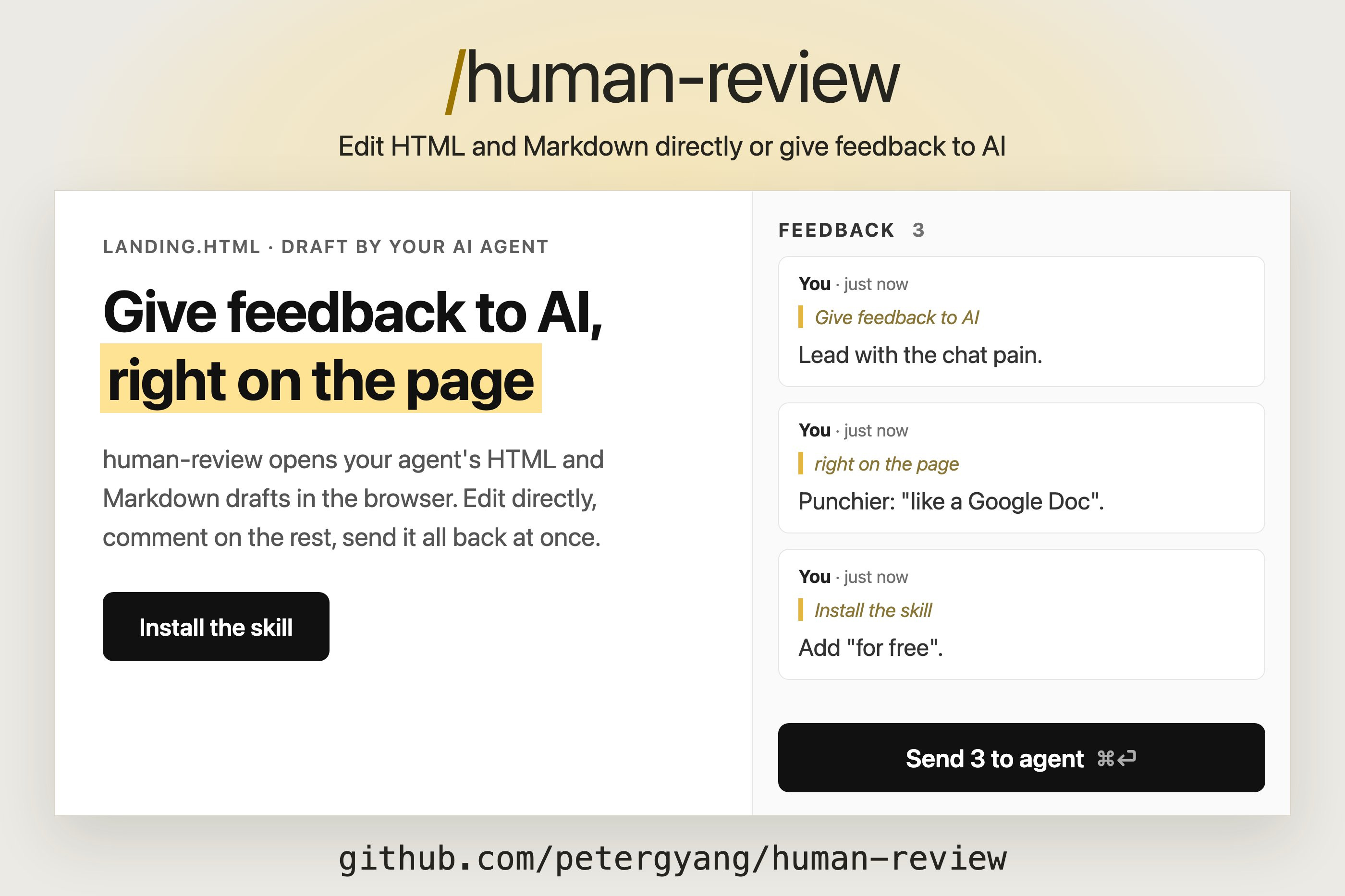
I think people like these products because I built them for agents first:
Both work inside your favorite AI harness. I don’t want to use another app or website — I want tools that work with ChatGPT.
The agent is the primary user. For example, Human Review sends feedback to the agent to make fixes.
My point is that many productivity products will look more like skills and tools for agents to use instead of websites and apps that people visit.
4. Most software will become commoditized
I laugh when I see taglines like “Anyone can build an app now!” The truth is:
Software has become easier to build but much harder to monetize.
Consider the following:
Pieter Levels recently shared that he’s seeing declining traffic and revenue across indie SaaS products, including some of his own:
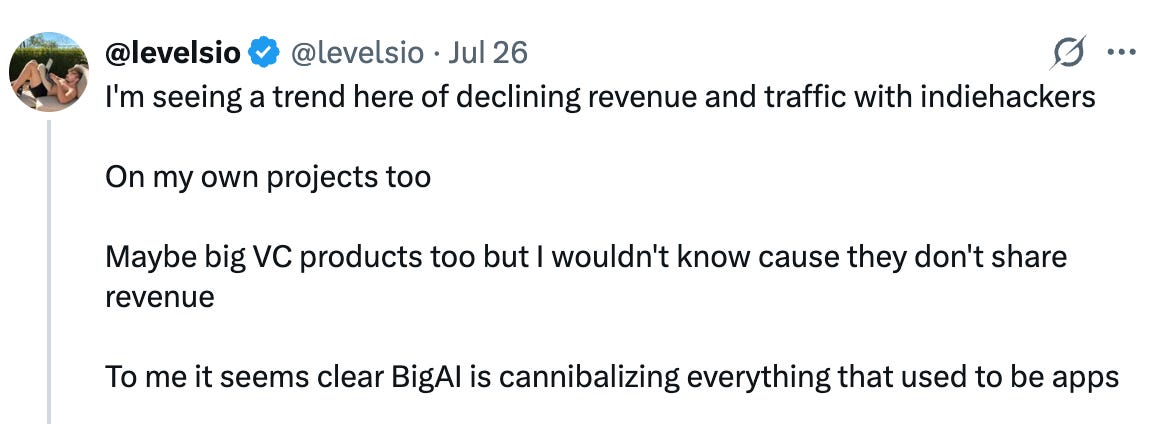
Traditional SaaS companies are also facing pressure. Airtable sold for $1.29B after once being valued at $11B, and Canva cut its revenue forecast by 20%.
Many SaaS tools are becoming harder to justify paying for when people can just build the same thing inside ChatGPT or Claude. I recently interviewed Amol Jain (Head of Core Engineering at Replit) and asked him this spicy question:
“What vibe-coded apps actually make money?”
He walked me through two examples:
TryNearby ($100K+ ARR) connects local businesses with creators for marketing.
GenAIPI ($180K in 6 weeks) helps companies assess, train, and certify employees’ AI proficiency.
Notice that neither company sells software by itself. TryNearby has a local creator network, while GenAIPI combines AI training with a trusted credential. The software makes both services easier to deliver, but it isn’t the scarce part.
Software without a real advantage, like proprietary data, distribution, or services, will become a commodity.
5. Trust will determine the winners and losers

I’ve been staying in Vancouver, and most of my friends and family here still use vanilla ChatGPT for Q&A. When I ask them why, they say: “I don’t trust AI enough to give it access to my email, calendar, and other apps.”
I believe that trust is the biggest barrier to broad agent adoption.
Cloud computers will only make the trust hurdle even higher. While testing Grok Bot, I came across this screen on its cloud computer:
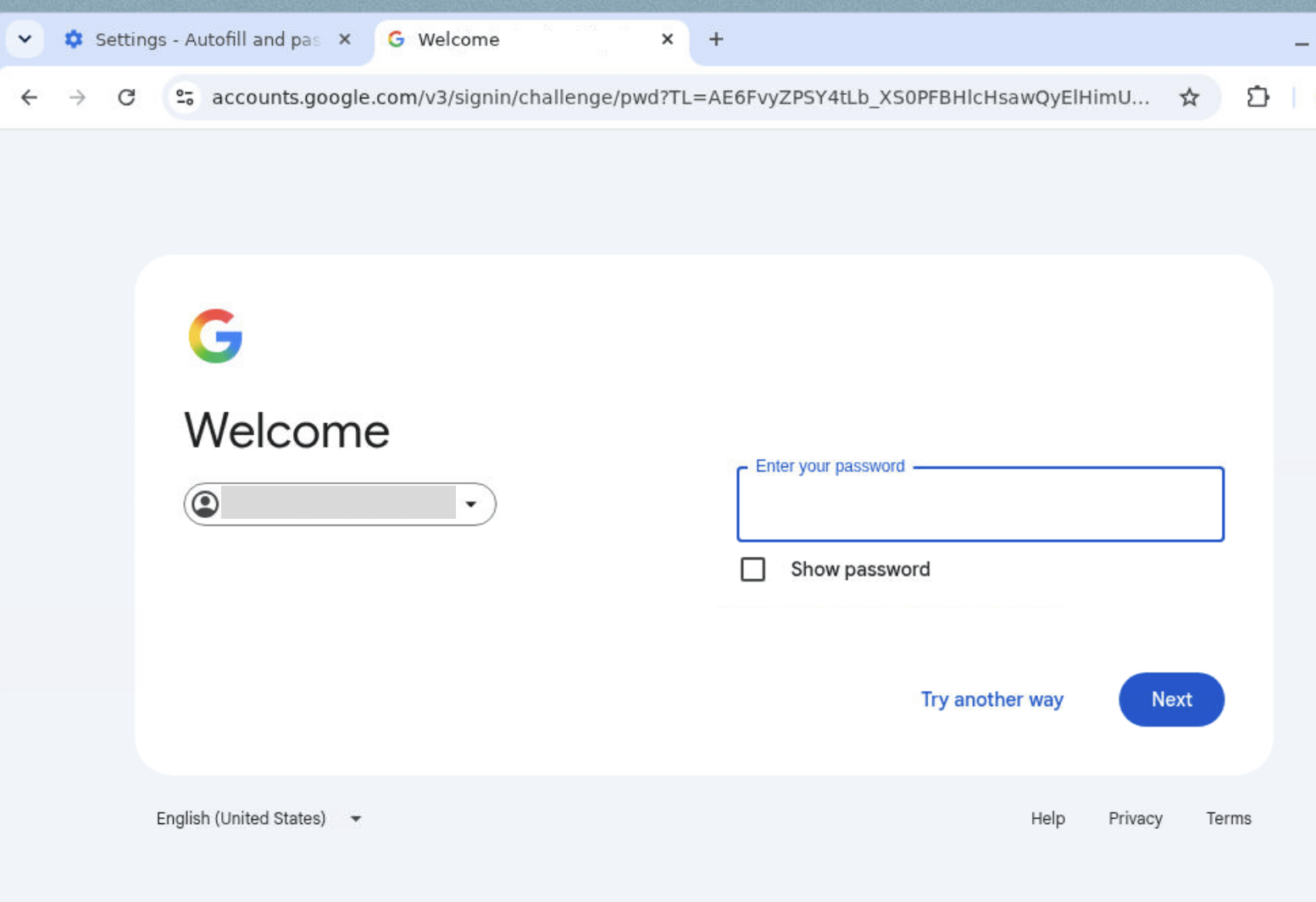
If this were on my laptop, I’d probably be comfortable entering my password. But because it’s on a cloud computer, I hesitated. Before proceeding, I’d want to know what the computer remembers, who can access it, and how I can revoke access.
The winning products will make trust and transparency first-class product features.
Get a head start on this future now
To recap, I think we’ll rapidly transition from using keyboards, mice, and laptops to directing agents in the cloud using our voice. If you want to get a head start:
Use ChatGPT Voice to orchestrate your other threads. Talk to it and give it instructions like “Spin up a chief of staff thread to look for emails to respond to.”
Try Grok Bot to experience cloud agents. Connect it to a few of your favorite apps to see how a persistent cloud computer works.
Vibe code products for agents first. Instead of vibe coding another standalone app for humans, build a tool that agents can use. Here’s my GitHub for inspiration.
Personally, I think monitoring agents on my laptop all day is incredibly draining.
I much prefer to close my laptop lid, go outside, and talk to agents to get work done. If you haven’t tried this yet, you really should.
How long before we barely use a screen for most things?
I understand how this may work for many people. It will not work for me. I never want my voice to be my primary computer interface. I'm a far more efficient typer than speaker, and my brain works differently when I'm typing.