


Dear subscribers,
Last year, I made seven figures at my product job. Last week, I left that job to bet on myself.
This wasn’t an easy choice to make. After over a decade in product, walking away from a great job felt like giving up a core part of my identity.
What finally helped me decide were 5 principles I wrote down after a lot of reflection.
Watch my video now to hear how I made this decision and perhaps it can help you think through your next career move too.
Timestamps:
(0:00) Why I quit my high-paying product job
(0:23) Go where work feels like play
(3:44) Give yourself permission to build
(5:35) At some point, trading time for wealth just isn't worth it
(8:33) Surround yourself with people who share your curiosity
(10:11) The people you love won't be there forever
(13:57) What I'm doing next (and a promise)
I’m proud to partner with Riverside

I’ve used Riverside for years to record my podcast thanks to its reliable, high-quality recording tools. But now I use it for much more than recording. Riverside has evolved into an end-to-end platform with AI editing, clip generation, streaming, and publishing tools. Try Riverside to go from concept to publish, all in one place.
1. Go where work feels like play
I became a PM over a decade ago because I wanted to ship great products. I loved the loop of understanding problems, identifying solutions, and executing to craft something great.
This loop is exactly what I got to do at Roblox. I have a lot of fond memories from shipping products like thumbnail personalization, configs & experiments, and AI analytics with my talented team of engineers, designers, and PMs. Most of all, I loved watching Roblox creators light up as we put these products in their hands.

But there’s another side of product management that I didn’t love, and it exists in some form at all the great companies that I’ve worked at. I call it product management theater, and it’s when the focus shifts to:
Polishing internal docs over the actual user-facing product.
Getting stakeholder alignment over doing what’s right for customers.
Climbing the career ladder over shipping products you’re proud of.
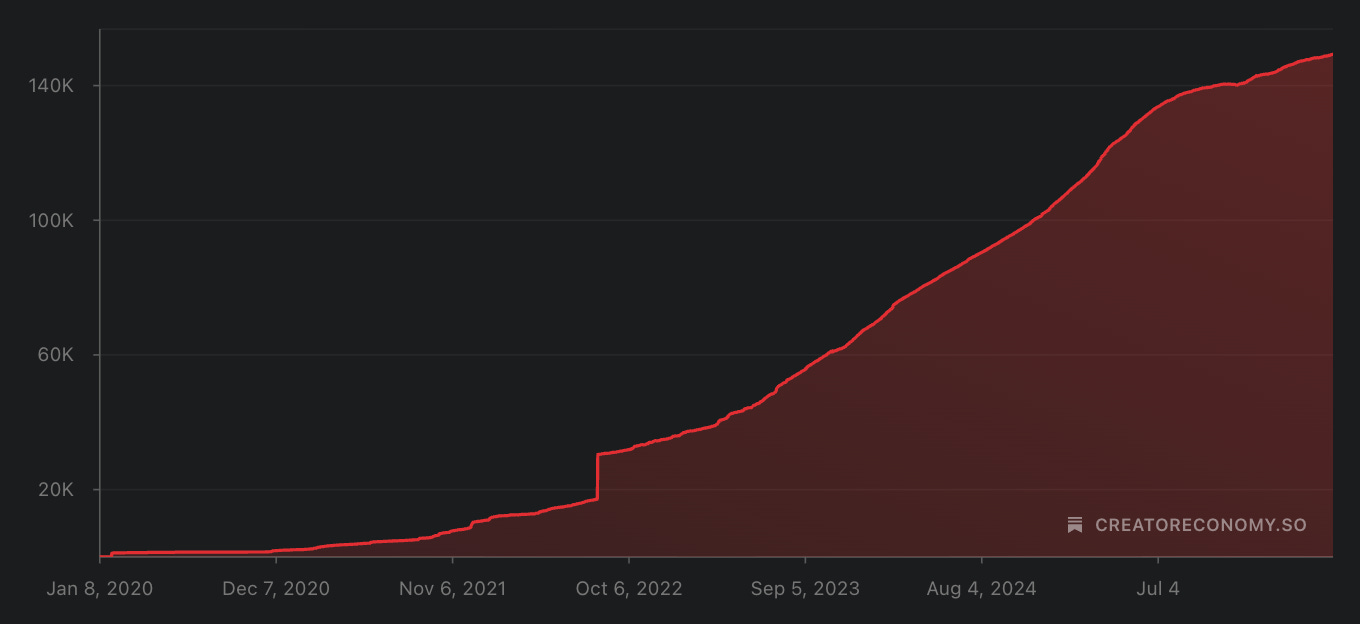
For example, early in my career, I spent 4 hours in a meeting with other PMs aligning on quarterly OKRs. That was one of the longest days in my PM career. Being stuck in that room is what pushed me to write my very first newsletter post. I desperately needed to ship something, even if it was just a blog post. That post became this newsletter, which now has almost 150K subscribers.
There’s a framework I come back to whenever I’m making a big career decision called the Zone of Genius. I use it to sort my work into 4 zones:
Zone of genius is what you’re great at and love doing.
Zone of curiosity is what you suck at but still love learning about.
Zone of excellence is what you’re great at but hate doing.
Zone of incompetence is what you suck at and have no desire to improve.

My zone of genius is building products with customers and sharing what I learn with you all. My zone of curiosity is getting better at building with AI agents. But all that PM theater I just described falls squarely into the other two zones.
My point is that you have to be honest with yourself.
I realized that I don’t want to spend my day in back-to-back meetings, no matter how much money or prestige comes with those jobs. I also realized that I was waking up at 6 AM every day to write this newsletter, even though I didn’t make any money from it for years.
Of course, I also loved crafting products and sharing memes with my team, and honestly I miss that already. But life is about trade-offs, and I wanted to spend more of my day in my zones of genius and curiosity.
So I encourage you to map out your own zones and be honest about what you actually enjoy, even if you’re not making money from it right now.
For me, I love building and get antsy if I can’t ship anything in a week, which brings me to the second principle.
2. Give yourself permission to build
The career ladder pushes everyone to be a leader, but I just want to be a builder.
The reality is that a lot of product leaders have calendars that look like this:

Because of this calendar, the only time that I really had to build was on nights and weekends.
Now don’t get me wrong, I enjoy helping people grow and think I’m good at it. But I never want to give up the craft of making great products. I love being hands-on and obsessing over every little detail, from the copy to the UX to the marketing, because that’s what it takes to make a product great.
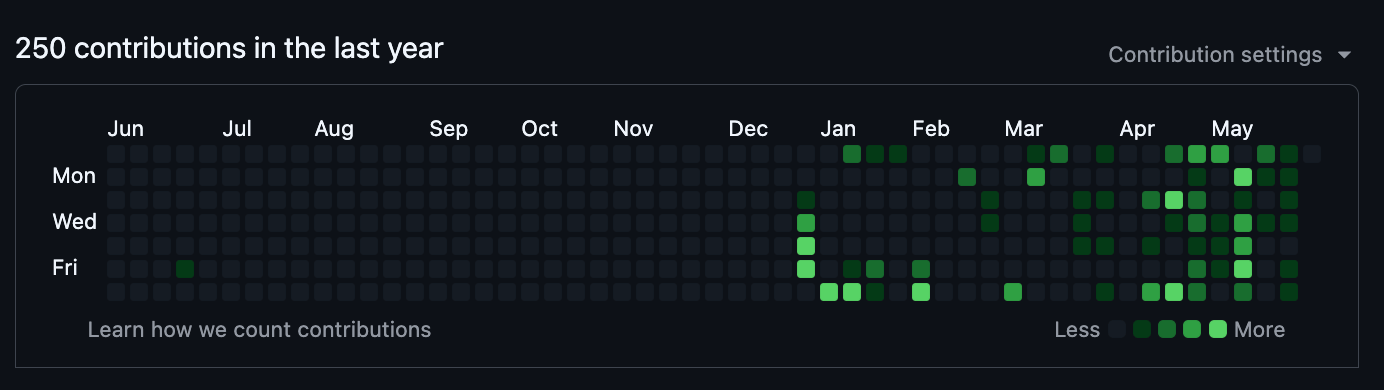
I also loved being able to check in code myself as a PM with AI’s help. Here’s the tongue-in-cheek GitHub profile that I used at work:

Yet, as you climb the ladder at most companies, you’re expected to step away from building and fill your time with product reviews, cross-functional alignment, managing up, and performance calibrations.
I know a lot of builders who spent their best years climbing the wrong ladder.
The good news is that this is finally changing. Companies are rewarding builders and ICs more than ever, and even managers are increasingly expected to do IC work too.
But becoming a good builder takes reps, and it’s just hard to put in those reps when you’re in back-to-back meetings all day.
So if you’re a builder at heart, embrace it. You don’t have to give up what you’re good at to be a “leader.”
It doesn’t matter if you’re an engineer, PM, marketer, or designer. Learn how to build.
3. At some point, trading time for wealth just isn’t worth it
Most people in tech are obsessed with total compensation and getting that next title.
If you’ve spent any time on Blind, you know what I’m talking about. Everyone is comparing how much they make, what their title is, and whether they work at OpenAI, Anthropic, or FAANG.
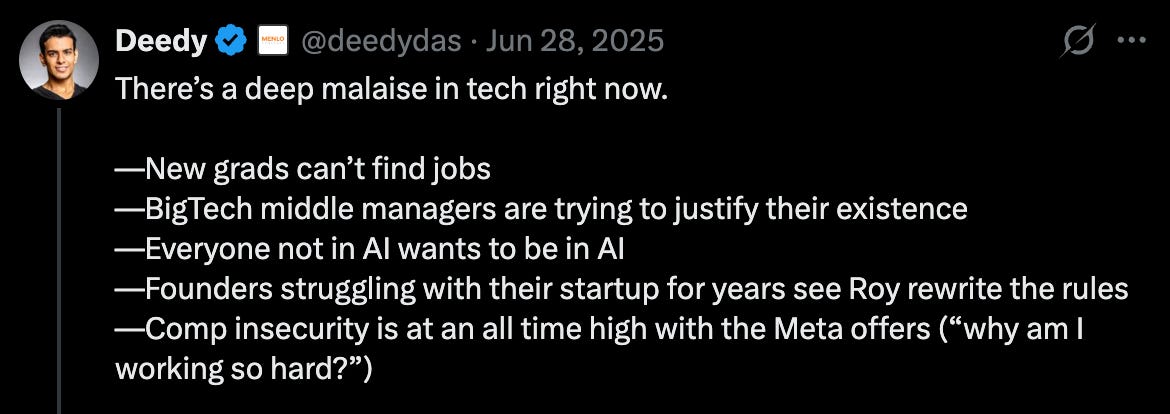
Look, I get it. Put in a few years at one of these companies and you can make generational wealth. But the people who hit all of these goals often have the least control over their time.
If you’re a VP, for example, chances are you’re in back-to-back meetings from morning to night. Kudos to anyone who can do that job well, but it’s just not the life I want. Instead, here’s what I figured out after the highest-earning year of my career:
Past a certain point, more money is not worth giving up agency over your time.
Real agency inside a company is rare. You might pour yourself into a promising product that gets canceled. You might have a great manager who gets re-orged out. So much of it is out of your hands.
And while I have a lot of respect for VC-backed founders, that life also sounds very stressful. You’ll have investors, a board, and payroll to satisfy every month whether you like it or not. With a VC-backed company, you have to go big or go home. You can’t just hit profitability and call it a day. Your investors will push you to 10x or 100x the business.
The path I want to try is being a bootstrapped founder of a small business. As long as I can pay the bills, I’m willing to trade off hundreds of thousands of dollars to be able to decide who I work with, what I work on, and how hard I work. It’s only been a week, but I love waking up to a calendar with no meetings before the afternoon and enough time to chase my curiosity and share what I learn with you all.
The funny thing is, growing up, I didn’t even know this was a real path. I chased prestigious schools and brand-name companies and thought there were only two options: climb the ladder in big tech, or raise money and build a unicorn.
But I think bootstrapping makes a lot of sense now for many people. It’s cheaper than ever to start a business, and a single person with AI tools and agents can get a lot done.
To wrap up this section, there’s this image from Wait But Why that brings into perspective just how little time we all have:
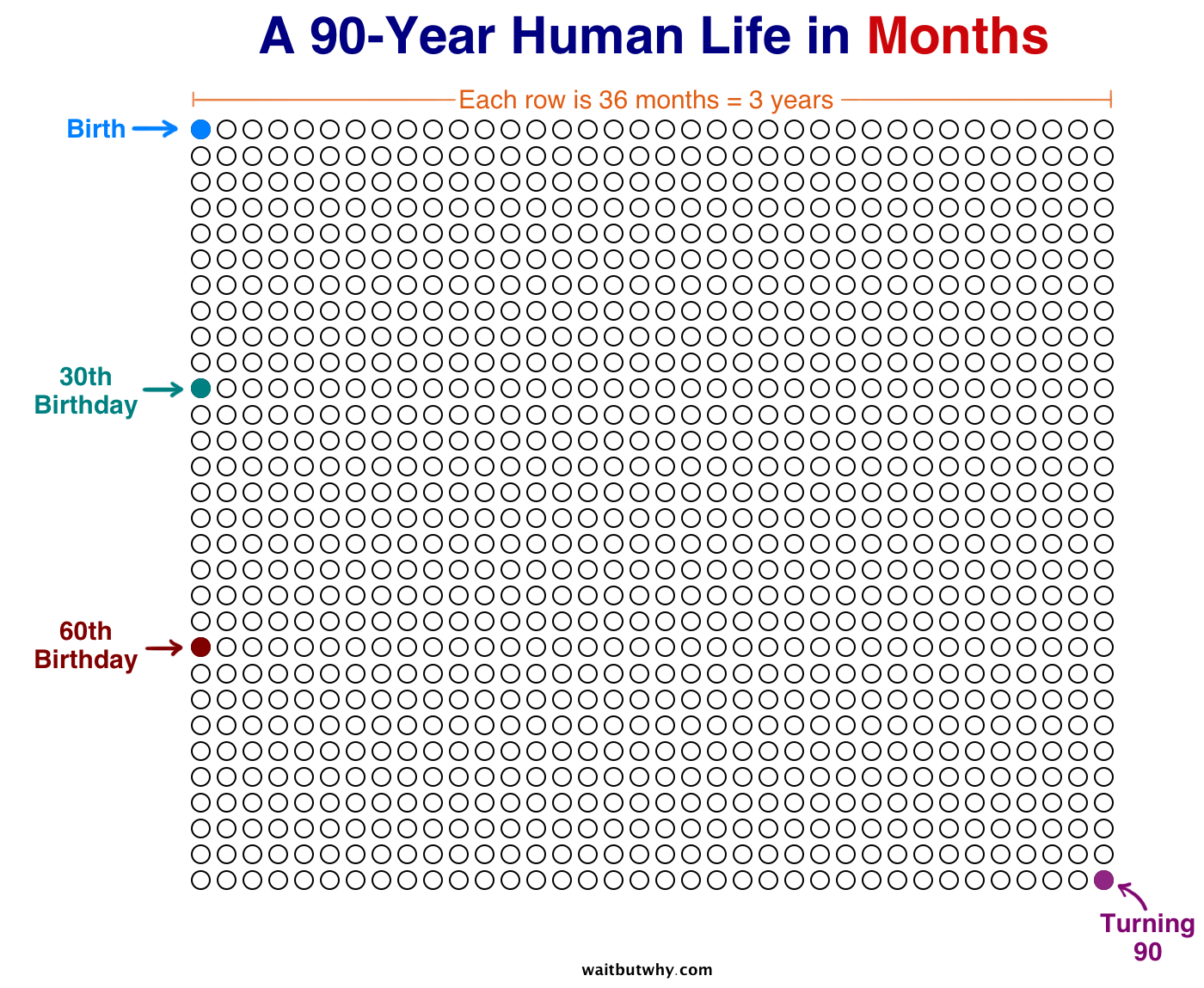
I’m in my early 40s so almost half of my time is already over. If you’re in my shoes, realize that:
The hedonistic treadmill of chasing money and prestige can become a trap. Time and agency are the most valuable assets we have.
4. Surround yourself with people who share your curiosity
One of the best ways to spend your time is with people who share your values and goals.
These days, I mostly make new friends through my kids’ playdates or online. X can be toxic if you’re just doom scrolling, but I’ve made some good friends there who gave me the courage to make this bet. I think everyone should have a few group chats with people who are on the same journey as them.
Two group chats that I rely on are:
A YouTube learning group started by my friend Steve Huynh, who spent 14 years as a principal engineer at Amazon before building his own business. I joke that Steve’s group is bad for the economy, because everyone in it eventually walks away from their high-paying tech job to build their own thing.
A PM creator group started by Ben Erez, with folks you might know like Lenny, Elena, and others. Everyone in it is a PM or product leader who’s also teaching, creating, and building.
My point is that it’s important to find people who share your values and goals. People who are honest, encouraging, and open, who won’t put up a front, and who’ll give you the courage to make decisions like this.
Courage is contagious. Hang out with people who’ve done some version of what you want to do and who are honest about the parts that are great and the parts that suck.
5. The people you love won’t be there forever
I think about my parents a lot these days. They sacrificed a lot to move to Canada and give me a good education. Now, they’re retired and honestly living the good life, going on cruises all the time.
The thing is, once you’re retired, nobody cares what your title was, how much money you made, or which company logos are on your LinkedIn.
Everyone just wants to enjoy what’s left of their life and be around the people they love.
And the reality is that at most companies I’ve worked at, there are only a handful of coworkers I still keep in touch with. Almost everyone else moves on the moment your employment ends.
So if work isn’t the relationship that lasts, then it has to be the people we too often put second: our family and close friends.
Being a PM and a creator at the same time made me feel productive, and the dual income was great, but I hadn’t had breakfast with my kids in months. I was just working all the time.
Over the past week, I’ve been walking my 8-year-old daughter to school. It’s twenty minutes each way, twenty minutes that I used to spend stuck in traffic or on Slack. Now I spend it with her, and she tells me about her friends, her dreams, and the things she’s worried about. This walk is now the highlight of my day.

Before I quit, I promised my wife I’d spend more time being present with my kids. Parenting is hard and I’m far from perfect. Sometimes I just want to shut myself in a room and play video games. But I now have a lot more time to try to keep that promise.
Nobody wants to put on their tombstone that they got divorced and neglected their family, but at least they made VP at Meta.
The people you love won’t be there forever, so spend more time with them while you can.
The 5 principles that helped me make my decision
Here are the five principles again that led to my decision to leave a high-paying job to bet on myself:
Go where work feels like play. Map out your zone of genius and be honest with yourself about what you actually enjoy doing.
Give yourself permission to build. If you're a builder at heart, embrace it, because you don't have to give up what you're good at to become a "leader."
At some point, trading time for wealth just isn’t worth it. Real wealth is having agency over who you work with, what you work on, and how hard you work.
Surround yourself with people who share your curiosity. Courage is contagious, so find people who are on a similar journey as you.
The people you love won’t be there forever. Make time for your family and close friends while you still can.
One more piece of practical advice if you’re feeling the same itch to bootstrap:
Don’t take a blind leap. It took me three years to get here, and I didn’t make the jump until I was making around the same from my business as my product salary. Start by tinkering and building things on the side while showing up fully at your day job. I took pride in my work at Roblox until my last day.
Here’s what I’m doing next
For now, my focus is on delivering the most practical AI tutorials and interviews available online. That means:
Making this channel and my newsletter the best place to learn AI online without the hype.
Building behindthecraft.com into a valuable membership where you can get my personal AI operating system, AI tools, and community access.
Building products with AI myself and sharing all the wins and the mistakes along the way.
One more thing — it’s so easy to pump out AI slop these days, but I think trust is the only currency that matters for creators and builders. I’ll use AI to save time, but I promise that everything I publish will be reviewed by my own eyes and AI slop free.
And if I ever get too cringe, you should hold me accountable.
Watch my video and I’m happy to answer any questions in the comments.
Love this pov, Peter! I’ve been following your story for a while and now a paid subscriber. Betting yourself is perhaps the 🔑 to life that many of us realize as we move through it more 😉 I’m right here w you!
I quit Meta four years ago for all these reasons, it's been great :)
The only not great part is that life in a HCOL area really does get more expensive, and your neighbors who work at Google and NVIDIA didn't quit so they can afford $10,000 karate lessons (or whatever) whereas you might not be able to. A worthwhile tradeoff for quality time with the kids, especially while they're young, but something I've had to remind myself of.