


Dear subscribers,
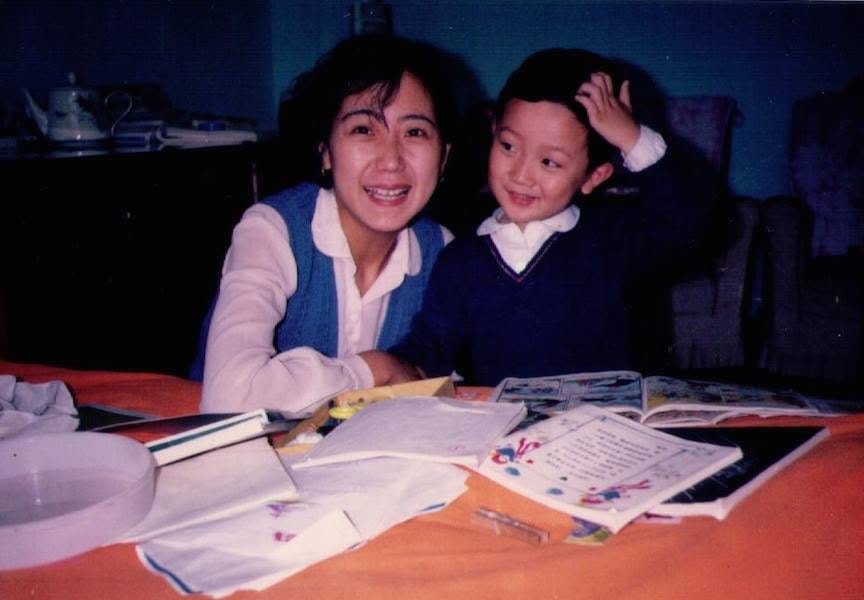
Today, I want to share a personal story about my mom that has occupied most of my time over the past few weeks.
Every summer, my wife and I bring our daughters to Vancouver to visit my parents. We’ve shared many happy memories together, and I expected this visit to be the same.
But a week into our trip, a CT scan found a mass in my mom’s chest. She has survived breast cancer three times, and the radiologist suspects it may have returned.
The first three times this happened, my parents carried most of the burden. This time, I’m not going to be a bystander. Instead, I’m making my mom my #1 priority for the rest of this year.
I’m proud to partner with Wispr Flow

Wispr Flow recently launched Notetaker to help you take effective meeting notes. I’ve been testing it out and love how it automatically recognizes speaker names and turns conversations into summaries that I can act on. Check it out for free via my link.
A brief history of my mom’s battle against cancer
If you know anyone who has cancer, you know that it casts a dark cloud over the whole family. I’ve experienced this cloud three time before:
The first time was while I was in high school. My mom went through chemotherapy and lost her hair, but my parents shielded me from most of what was happening. I knew she was sick without understanding how serious it was.
The second time was while I was in college. I barely remember it because I was on the opposite coast attending Brown. My dad took care of her treatment.
The third time was when I was getting married. By then, my mom’s cancer had progressed to stage 3, but she didn’t tell me because she didn’t want it to overshadow my wedding. I remember her showing up to the wedding wearing a wig.
She was going through treatment and still worrying more about protecting my happiness.
After that, she had 10 good years free from cancer. She traveled the world with my dad, and her doctors stopped checking on her after 5 years.
But now her cancer is likely back.
AI is helping me navigate the healthcare system
Needless to say, I turned to AI to understand my mom’s situation:
I created a ChatGPT project with her scans and medical records, then shared it with my parents so we could work from the same facts.
I got AI to explain the reports in plain English, flag what remained uncertain, and prepare questions for her doctors.
I used AI to maintain a one-page brief with her history, the latest updates, open questions, and key phone numbers.
I expected AI to be most useful for researching the disease, but honestly, its biggest value has been helping us navigate the healthcare bureaucracy. A few examples:
My mom’s primary doctor submitted an oncology referral. AI helped me realize that getting a biopsy required a separate referral.
AI identified the hospital department that performs biopsies and helped me pre-fill the request for her primary doctor.
AI helped me find who to call, what to ask, and how to follow up on both referrals.
Here’s one of my conversations with AI:
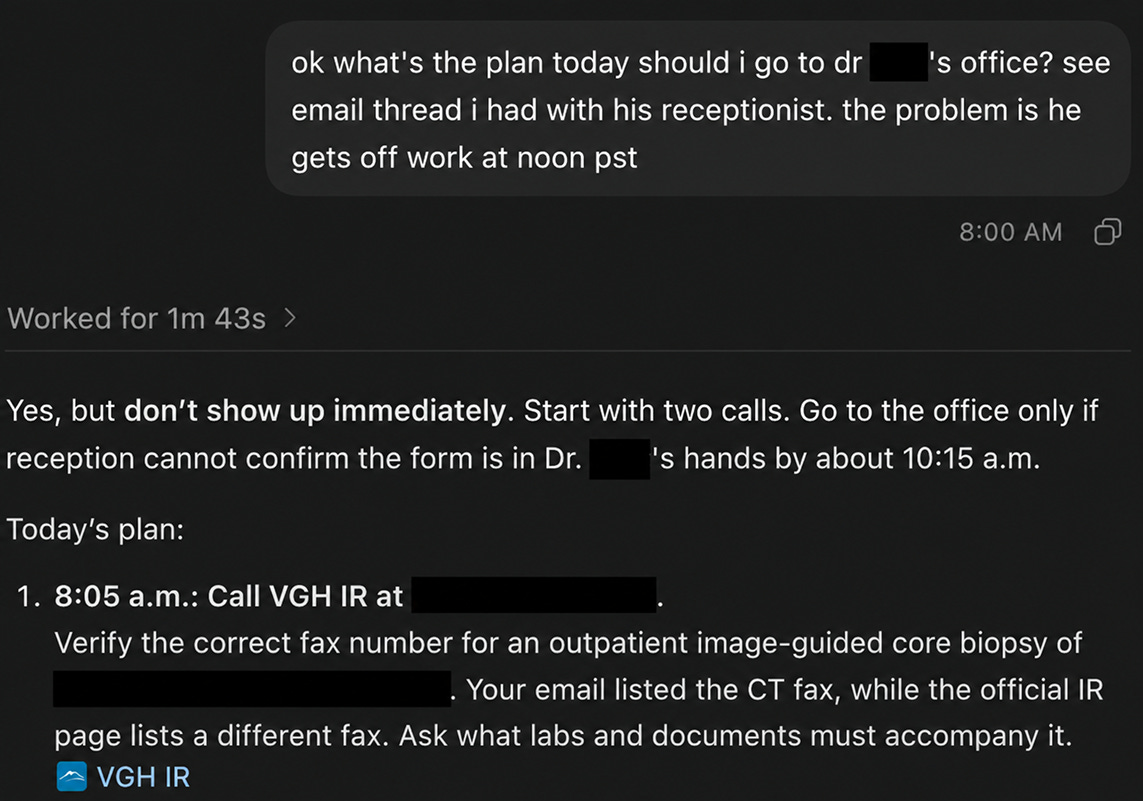
So far, AI’s biggest contribution has been helping me get the right information to the right people without losing time. After almost daily calls to various medical departments, we now have a biopsy booked for later this week and an oncology appointment for later this month.
Strangers have been generous with their time
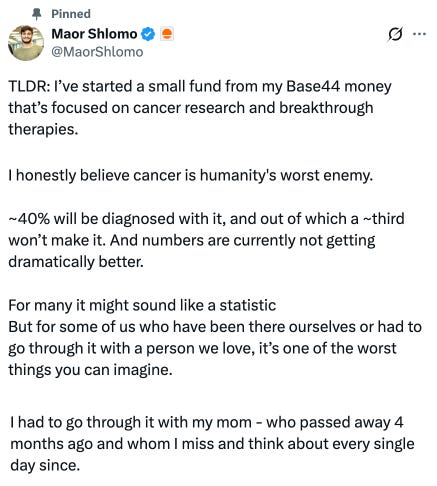
As useful as AI is, good old-fashioned human connection has been just as important. I’ve been struck by how willing strangers have been to help:
Maor, the founder of Base44, raised the idea of preserving extra tissue for deeper testing and connected me with people exploring options beyond standard care.
Rachel, a breast cancer nurse in Israel, reviewed four scans and explained what the biopsy needs to clarify, including which tumor markers should be retested.
Poornima and Bayli from the Sijbrandij Foundation advised us to pursue the biopsy referral in parallel and and ask about cancellation lists.
Katy, my oncologist friend, reviewed the scans and encouraged us to reconnect with my mom’s former cancer team.
I added the notes to the shared AI project after every conversation so we could build on everything we had learned.
I’m putting my mom first
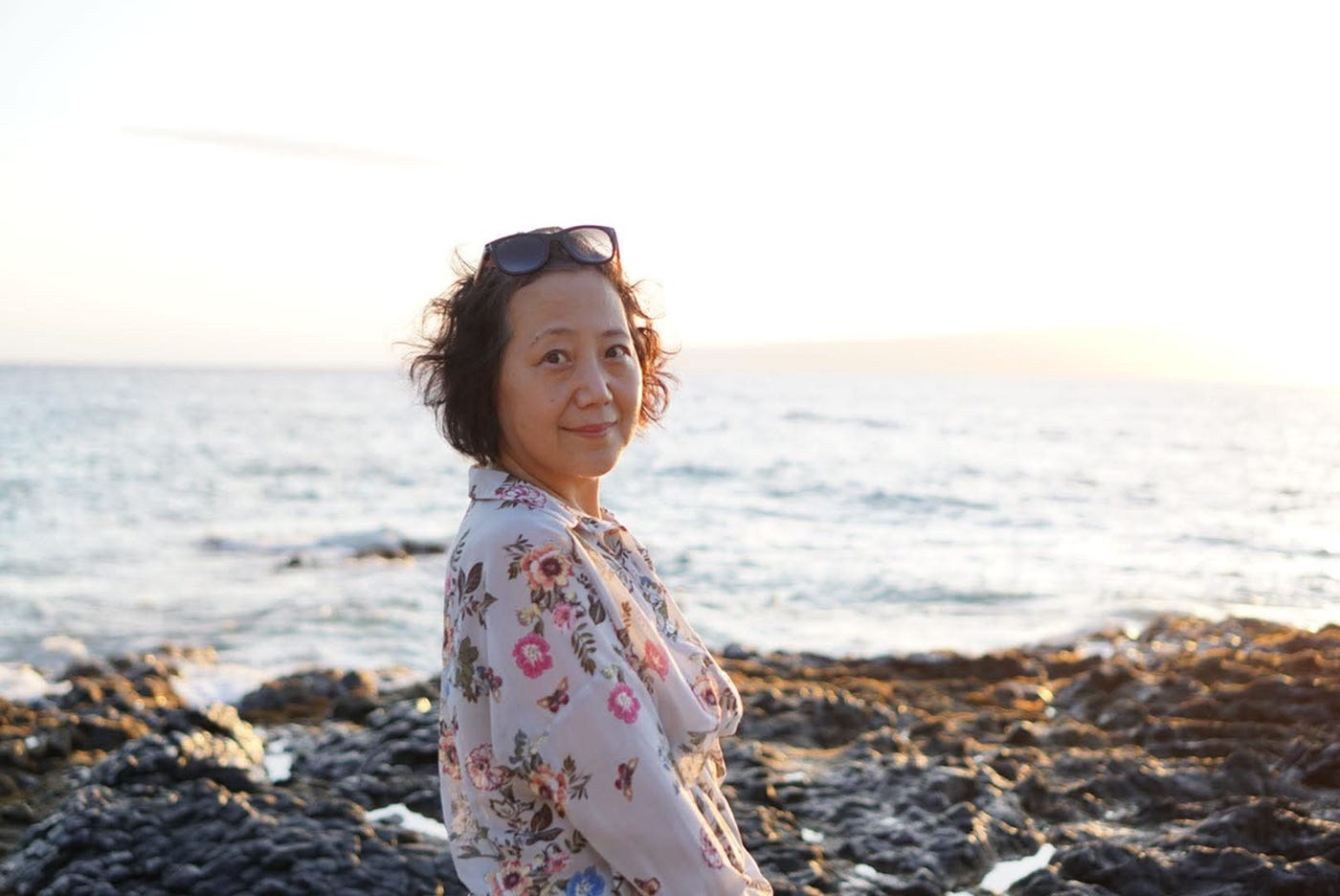
When I shared that I was quitting my job, I wrote that you shouldn’t take the people you love for granted. I didn’t expect that lesson to feel so real only a few months later.
The greatest gift of going independent has been being able to choose how I spend my time. After interviewing hundreds of AI builders and leaders, the person I most want to sit down with now is my mom.
My dad needs to travel to Asia, so I booked another flight back to Vancouver to be with her. I plan to ask her about what it was like to cook for her younger brothers as a teenager, move to a new country, and build a life with my dad from nothing.
The business can wait. I want to hear all her stories.
P.S. If you know about the latest breast cancer treatments or have a personal cancer story you’d like to share, I’d love to hear from you (just reply to this email).
Thinking positive thoughts for your mom, you and the rest of your family.
Man this definitively struck a close nerve, being a cancer survivor myself and having lost several family members to the same, this is a use case that definitively inspires me. Thanks a lot for sharing, hoping for the best results and sending all the possible good energy, stay positive!